Sleep comparison guide
Melatonin vs Valerian: Which Sleep Aid Fits the Problem?
A cautious comparison of melatonin and valerian for sleep onset, sleep maintenance, next-day grogginess, and evidence quality.
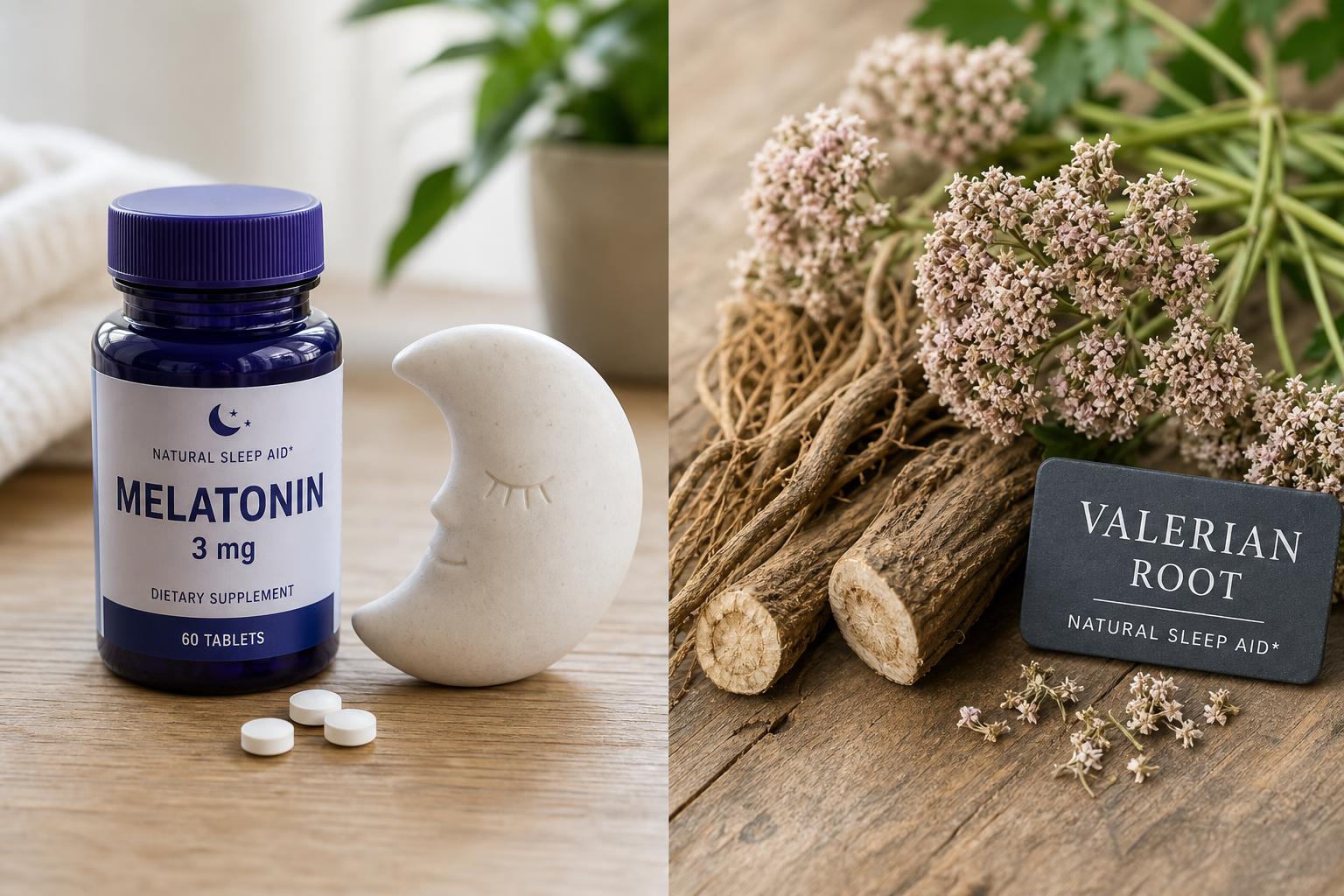
TL;DR
- Melatonin is a circadian timing signal, not a general-purpose sedative. It fits sleep-onset timing problems better than broad insomnia claims.
- Valerian is more uncertain. Some reviews find subjective sleep-quality signals, but the overall evidence remains mixed and inconclusive.
- If you use either, avoid combining them with alcohol, sedatives, or sleep medications without medical guidance.
Evidence snapshot
Evidence Strength — Melatonin vs Valerian: Which Sleep Aid Fits the Problem?
Confidence estimate based on available human and mechanistic research.
See evidence detailsHide details
Melatonin has more consistent support for sleep timing and onset than valerian, while valerian evidence remains inconsistent across reviews.
Limitations
- Valerian studies vary by extract and outcome.
- Melatonin effects are usually modest and timing-dependent.
Evidence ratings are editorial assessments based on available published research. They are not medical recommendations. How we rate evidence →
What do these evidence levels mean?Hide evidence level guide
Evidence Strength Scale — How We Rate Research
Each rating reflects the quality, quantity, and human relevance of available clinical research. Ratings are assigned to specific outcomes (e.g., “sleep quality”) — not compounds overall.
What it means: Multiple RCTs or a meta-analysis with consistent positive results across independent labs.
Human trials: Yes — robust human clinical data
What it means: Human trials showing generally positive outcomes, though study scale or consistency may vary.
Human trials: Yes — at least some quality human trials
What it means: Small-scale human studies or preliminary trials exist, but better-controlled or larger trials are lacking.
Human trials: Some — early or small human data
What it means: Evidence comes mainly from animal studies, cell cultures, or proposed mechanisms — not validated in human trials.
Human trials: No — animal or theoretical only
What it means: Long historical or ethnobotanical use; modern clinical validation is minimal or absent.
Human trials: No — traditional use record only
Ratings reflect what the scientific literature currently supports — not marketing claims. Effect sizes, study quality, and population context all influence the final grade. “Moderate” evidence is meaningful; most supplements in widespread use sit at “Limited” or below.
Mechanism
Mechanisms are used here to explain plausibility, not to upgrade weak clinical evidence into strong claims.
Mechanism Pathway — Melatonin and Valerian Work on Different Problems
Decision table
| Option | Evidence | Typical dose | Best fit | Caution |
|---|---|---|---|---|
| Melatonin | Moderate for sleep onset/timing | 0.3-3 mg | Delayed sleep timing, jet lag style issues | Grogginess, vivid dreams, medication interactions |
| Valerian | Mixed/inconclusive | Extract-dependent | Subjective calm or sleep quality experiments | Sedatives, alcohol, pregnancy, liver concerns |
Introduction
Melatonin and valerian are often shelved next to each other, but they are not interchangeable. Melatonin is a hormone-like timing signal. Valerian is a botanical preparation with variable extracts and mixed evidence.
That distinction matters because “can’t fall asleep at the desired time” is different from “sleep feels light and restless.”
Human evidence
Melatonin reviews generally show modest improvements in sleep onset latency and total sleep time, with stronger logic when circadian timing is the problem. NIH summaries also note that some insomnia outcomes show no clear difference in certain trials.
Valerian evidence is less settled. Older reviews suggested possible subjective sleep-quality benefits, but more recent summaries describe the evidence base as weak or inconclusive.
Dosage guidance
For melatonin, more is not automatically better. Many users should think in the 0.3-3 mg range rather than jumping to high-dose gummies.
For valerian, dosing depends heavily on extract type. If the label does not clearly describe extract strength or serving size, it is hard to compare products responsibly.
Safety and interactions
Both can add to sedation. Avoid combining with alcohol, sleep medications, benzodiazepines, opioids, or other sedating substances unless a clinician has reviewed the combination.
Melatonin deserves extra caution with pregnancy, seizure disorders, anticoagulants, immunosuppressants, and complex endocrine conditions. Valerian deserves caution with liver concerns and perioperative sedation risk.
Comparisons and stacking guidance
Choose melatonin when timing is the obvious issue: jet lag, delayed bedtime, or a shifted sleep window. Choose valerian only if you accept a less certain evidence base and tolerate botanicals well.
Do not combine melatonin and valerian as a first experiment. If one causes grogginess, you need to know which one did it.
Affiliate pick
Product-quality starting points
Use this as a sourcing starting point. Check dose, form, testing, and safety before buying.
Affiliate disclosure: we may earn a commission from qualifying links at no extra cost to you. How we stay independent.
Recommended product
Nature's Way - Nature's Way Standardized Valerian
Best overall for a standardized 0.8% valerenic acid extract with clear labeling.
Budget option
NOW Foods - NOW Valerian Root 500 mg
Budget pick for a standard valerian root capsule from a reliable mass-market brand.
Premium option
Herb Pharm - Herb Pharm Valerian Liquid Extract
Premium liquid extract for faster absorption and flexible dosing, from a respected botanical brand.
FAQ
Is melatonin stronger than valerian?
Stronger is the wrong frame. Melatonin is more targeted for circadian timing and sleep onset. Valerian is a calming herb with mixed and less predictable evidence.
Can I take melatonin and valerian together?
Combining them can increase sedation and makes side effects harder to interpret. A conservative approach is to test one at a time and avoid the combination with alcohol or sedating medications.
Which is less likely to cause next-day grogginess?
Either can cause grogginess in some users. Melatonin grogginess often relates to dose and timing; valerian response is more product- and person-specific.
Choosing between melatonin and valerian?
Match the supplement to the sleep problem instead of stacking sedatives by default.
Free safety checklist
Get weekly supplement evidence updates
One practical email a week on evidence quality, safety flags, and better supplement decisions. Includes the free safety checklist.
We use your email to send the checklist and occasional evidence-first supplement updates. Unsubscribe anytime. Privacy policy.