NOW Foods
NOW Melatonin 3 mg
Budget pick for a common 3 mg melatonin capsule — lower dose preferred by most sleep researchers.
Comparison guide context
Evidence-informed 3-way comparison of melatonin, valerian root, and magnesium for sleep latency, circadian rhythm timing, safety, and supplement selection. Comparison pages are meant to clarify tradeoffs, not declare one ingredient universally better. The better choice depends on the goal, evidence quality, safety profile, dose realism, and whether the ingredient duplicates something already in a stack.
Read Melatonin vs Valerian vs Magnesium: Which Supports Your Sleep Pattern? by looking for differences in mechanism, onset, tolerability, interaction risk, and product quality. A stronger evidence rating for one use case does not automatically transfer to another goal.
If both options influence the same pathway, consider simplifying rather than stacking. Reducing overlap often makes side effects easier to identify and decisions easier to reverse.
Educational Comparison
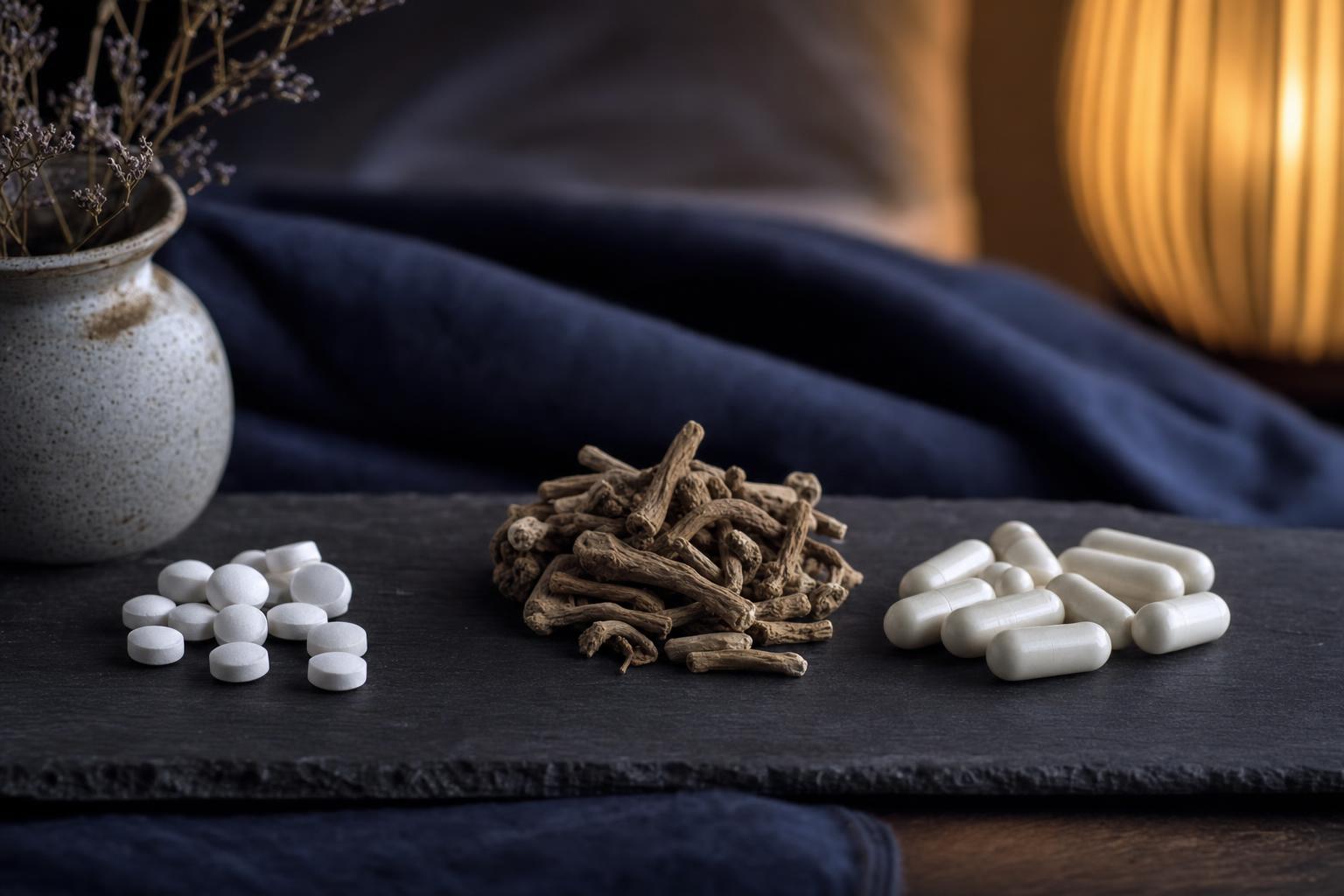
If you struggle to fall asleep, these three common bedtime choices target entirely different aspects of sleep. Melatonin acts as a circadian timing signal to shift when you feel tired. Valerian root is a traditional herb targeting GABA pathways to reduce sleep latency over weeks. Magnesium glycinate provides foundational mineral support for baseline physical muscle relaxation.
Quick answer
Melatonin, valerian root, and magnesium support sleep in different ways: melatonin shifts circadian timing for people who aren't tired at bedtime, valerian root builds cumulative GABA-related relaxation over 2-4 weeks, and magnesium (especially glycinate) supports baseline physical relaxation and muscle tension release.
Circadian Signal
Best for sleep timing shifts, jet lag, or shift work. It is a hormone, not a sedative, and is most effective when taken in low doses (0.3–3 mg) 30–60 minutes before your desired bedtime.
GABAergic Herb
Best for mild bedtime restlessness. It is a traditional relaxing root extract that works by modulating GABA-A receptors, showing cumulative benefit over 2–4 weeks.
Physical Relaxant
Best for physical tension, cramps, and nightly wind-down routines. Highly bioavailable forms like magnesium glycinate also deliver glycine, supporting neurochemical quieting.
Decision Table
| Factor | Melatonin | Valerian Root | Magnesium (Glycinate) |
|---|---|---|---|
| Primary Fit | Shifted sleep schedule, jet lag, late-night sleep onset | Mild bedtime worry, general sleep quality issues | Physical restlessness, muscle tension, wind-down baseline |
| Onset Speed | 30 to 60 minutes | Cumulative; requires 2 to 4 weeks of daily use | Days to weeks of steady evening use |
| Primary Mechanism | Suprachiasmatic nucleus melatonin receptor activation | Valerenic acids modulate GABA-A receptors | NMDA receptor block; glycine neurotransmission |
| Evidence Grade | Strong (timing) | Limited to Moderate | Limited to Moderate |
| Main Cautions | Autoimmune caution, vivid dreams, morning grogginess | Sedative medications, alcohol, strong odor aversion | Renal clearance issues ( kidney disease) |
| Bottom Line | Best for fixing sleep schedule timing | Best traditional herb for cumulative sleep support | Best baseline daily relaxation mineral |
Scenario 1
If you lie awake for hours staring at the ceiling because you are simply not tired until 3:00 AM, Melatonin is the primary intervention. Start with low, physiological doses (e.g. 0.3 mg) to avoid the heavy morning grogginess caused by typical megadose retail tablets.
Scenario 2
If you want a natural herbal alternative to pharmaceutical sleep aids, Valerian roothas long historical usage. Keep in mind that clinical trials show its benefits are cumulative; taking a single dose on an irregular basis is unlikely to provide significant relief.
Scenario 3
If you struggle to fall asleep because your body feels tense, tight, or you experience evening muscle soreness, Magnesium glycinate supports natural muscle relaxation and baseline GABA levels without altering your sleep hormones directly.
Safety & Clinical Cautions
Do not treat these options as risk-free just because they are sold over-the-counter:
FAQ
Most commercial melatonin supplements are dosed at 5 mg or 10 mg—which is up to 30 times higher than the physiological dose (0.3 mg) our brains produce. This massive excess spills over into the morning, causing hangover-like fatigue.
Yes. Valerian root contains volatile compounds (including valeric acid) that smell strongly of sweaty socks or damp earth. This is normal for genuine extracts and does not mean the product has gone bad.
Yes. They are commonly paired. Magnesium glycinate relaxes the muscle tissue and nervous system, while melatonin signaling coordinates the circadian sleep cycle. Check with a pharmacist to ensure they do not conflict with your existing medications.
Email updates
Download our evidence-first sleep guide covering low-dose melatonin protocols, clean magnesium forms, and safety checklists.
Dig deeper into sleep science, dosage forms, and related adaptogens.
Compound
Circadian clock hormone. Strong for sleep-onset timing, with vivid dream tradeoffs.
Herb
Traditional GABA-modulating root extract. Cumulative benefits for bedtime tension.
Compound
Essential mineral for muscle relaxation, NMDA pathway regulation, and sleep support.
Guide
A comprehensive decision guide comparing sleep aids by onset speed and risk.
Some pages may include affiliate links. If you buy through those links, The Hippie Scientist may earn a commission at no additional cost to you. Affiliate relationships do not change evidence ratings, safety warnings, product-quality criteria, or editorial conclusions.
Read our affiliate and editorial policyAffiliate-ready sourcing
Affiliate recommended options selected by editorial standards. Review dosage and kidney health warnings first.
Affiliate disclosure: we may earn a commission from qualifying links at no extra cost to you. How we stay independent.