Safety-Led Discovery
Psychedelic-Adjacent Herbs
This guide provides a conservative, evidence-based review of traditional and ritual botanicals. These herbs are not substitutes for clinical care or regulated psychedelics, and they require strict attention to dosing, pharmacological interactions, and safety thresholds.
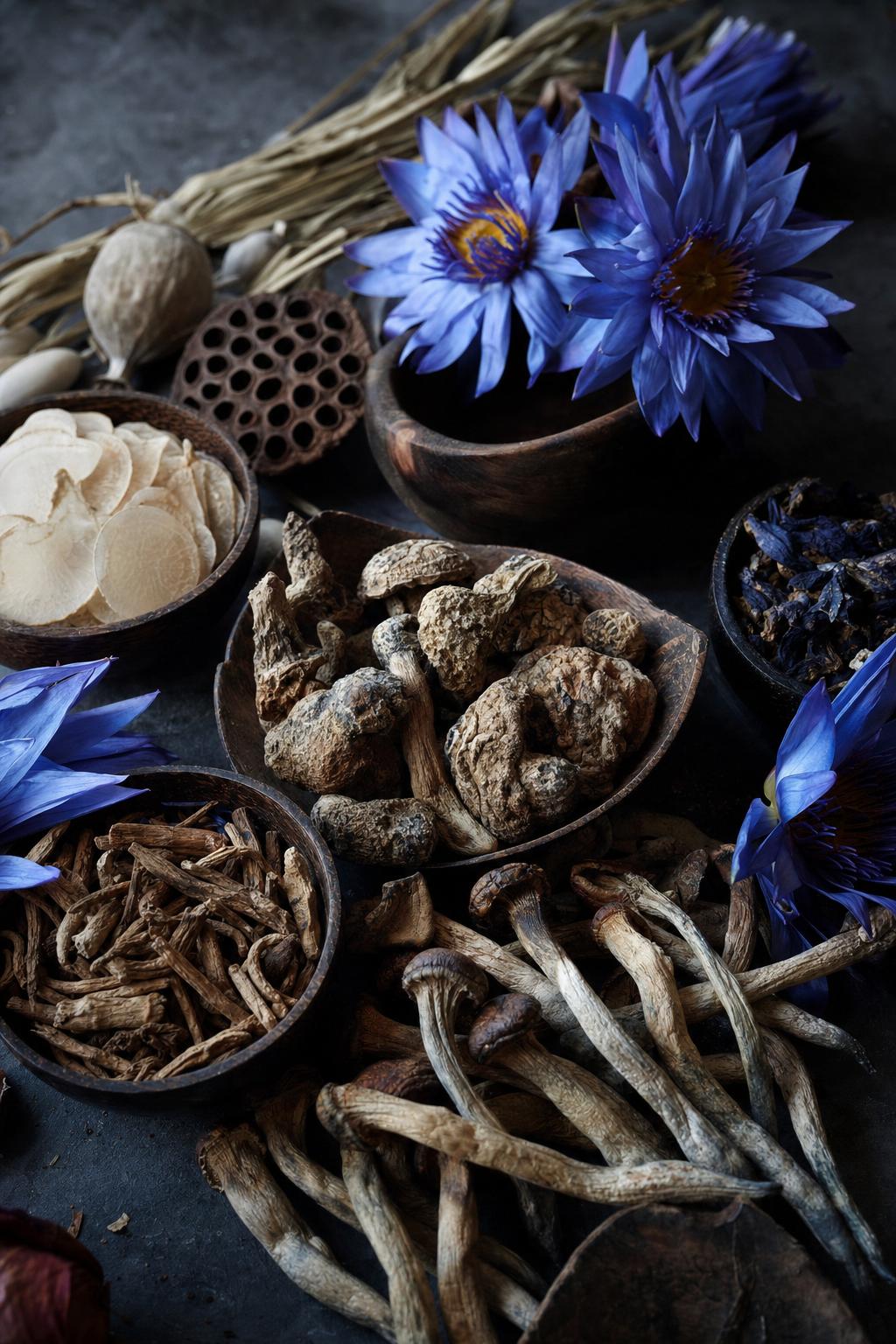
Monitored Botanical Profiles
Review traditional uses, chemical constituents, and safety limits for these herbs.
Blue Lotus (Nymphaea caerulea)
Traditional Use: Mild relaxation, dream enrichment, traditional Egyptian rituals.
- Active Constituents: Apomorphine (dopamine receptor agonist) and nuciferine (dopamine/serotonin antagonist signals).
- Mechanisms: Dopaminergic activity and mild GABA-A pathway modulation.
- Safety Context: Standard caution. Mild sedative profile. Avoid stacking with heavy central depressants or alcohol.
Kanna (Sceletium tortuosum)
Traditional Use: Mood elevation, cognitive quieting, stress resilience.
- Active Constituents: Mesembrine and mesembrenone alkaloids.
- Mechanisms: Serotonin reuptake inhibitor (SRI) and PDE4 inhibitor.
- Safety Context: High precaution. Do NOT stack with SSRIs, MAOIs, or other serotonergic agents due to Serotonin Syndrome risks.
Core Harm Reduction Checkpoints
1. Avoid Multi-Stacking
Combining psychoactive-adjacent herbs with each other, alcohol, or central depressants increases unpredictable neurological side effects.
2. Screen for SSRI/MAOI Conflict
Herbs that modify serotonin reuptake (like Kanna) can trigger a life-threatening increase in serotonin levels if mixed with clinical antidepressants.
3. Respect Potency Variations
Natural extracts differ vastly in alkaloid concentration. Always start with the lowest possible dose to gauge individual sensitivity.
Legal & Health Disclaimer
These pages are for educational and harm reduction purposes only. The Hippie Scientist does not advocate for the use of unregulated or illegal substances. Always review clinical contraindications and consult with a licensed physician before introducing any botanical supplements into your lifestyle.
References
- [1] Carhart-Harris RL, Goodwin GM. (2017). The therapeutic potential of psychedelic drugs. Neuropsychopharmacology, 42(11): 2105-2113. PubMed →
- [2] Nichols DE. (2016). Psychedelics. Pharmacol Rev, 68(2): 264-355. PubMed →
- [3] Johnson MW, et al. (2019). The abuse potential of medical psilocybin. Neuropharmacology, 142: 143-166. PubMed →