We use privacy-friendly analytics. Read our privacy policy.DNT/GPC detected: tracking stays off.
Evidence Review · Diagnosis before dosing
Iron Supplements: Test the Problem Before Treating the Number
Iron is essential, but it is not a general energy supplement. Fatigue, low exercise tolerance, pallor, restless legs, and brain fog can occur with iron deficiency, but they are not specific enough to diagnose it. The safer sequence is to confirm the deficiency, understand why it happened, and then choose a treatment plan that matches the laboratory and clinical picture.
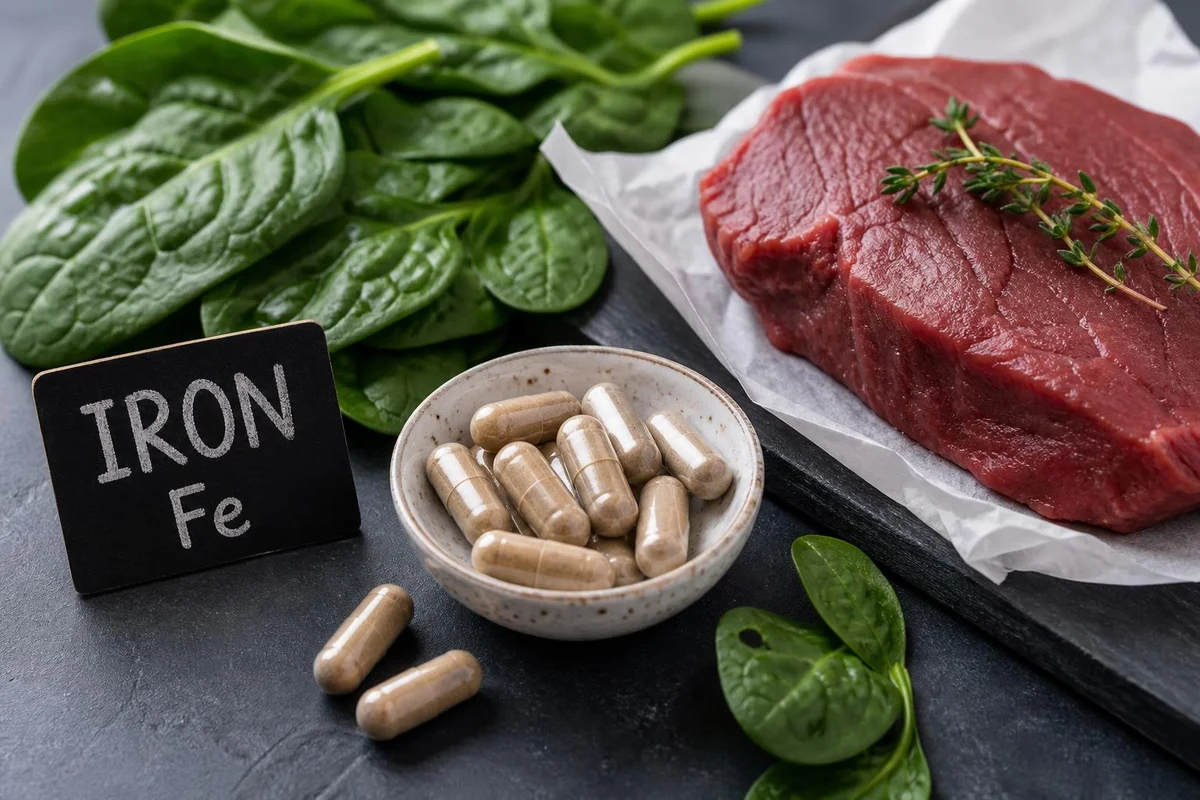
Iron decisions are strongest when they start with laboratory context and the cause of deficiency.
Quick answer
Do not turn fatigue or one ferritin number into a self-treatment protocol
There is no single ferritin cutoff that diagnoses iron deficiency in every clinical context. In patients with anemia, AGA recommends using 45 ng/mL rather than 15 ng/mL as the ferritin cutoff for iron deficiency [3]. WHO guidance emphasizes that infection and inflammation can raise ferritin and change how results should be interpreted [4]. Once iron deficiency is confirmed, the treatment dose should follow the diagnosis, cause, severity, and response rather than a universal internet dose.
The same caution applies to formulation. AGA states that no single oral iron formulation has a proven overall advantage and prefers ferrous sulfate mainly because it is inexpensive [2]. Every-other-day dosing may be better tolerated for some people, but that is treatment context—not a one-size-fits-all regimen [2].
Ferritin is useful, but context changes the cutoff
What it supports
Ferritin reflects iron stores and is central to diagnosing iron deficiency. AGA recommends a 45 ng/mL cutoff in patients with anemia, and WHO emphasizes adjustment when inflammation is present.
What it does not support
That one number such as 30 ng/mL diagnoses iron deficiency in every adult regardless of anemia, inflammation, pregnancy, kidney disease, or other clinical context.
Formulation is mainly a tolerability and practicality decision
What it supports
Common oral forms contain different amounts of elemental iron and can differ in gastrointestinal tolerability. Ferrous sulfate is inexpensive and well established.
What it does not support
That iron bisglycinate is universally the best-absorbed or best choice. AGA states that no single oral formulation has a proven overall advantage.
Treatment dosing is not a wellness protocol
What it supports
People with confirmed iron deficiency may need doses above normal dietary requirements under clinical supervision, with monitoring of blood counts and iron parameters.
What it does not support
That anyone with fatigue should start a fixed milligram dose. The treatment dose should follow the diagnosis, cause, severity, and response.
Choose the clinical question before choosing iron
Situation
Better next step
Fatigue, brain fog, shortness of breath, or restless legs without recent iron studies
Confirm whether iron deficiency is actually present. These symptoms are nonspecific and can come from many other conditions.
Anemia plus a low or borderline ferritin
Interpret ferritin with the CBC and clinical context. AGA uses a 45 ng/mL cutoff in patients with anemia, while inflammation and chronic disease can shift ferritin interpretation.
Confirmed iron-deficiency anemia
Treat the deficiency and investigate the cause. Men, postmenopausal women, and some premenopausal patients may need evaluation for gastrointestinal blood loss rather than iron replacement alone.
Oral iron causes constipation, nausea, or abdominal pain
Do not assume a premium formulation is automatically superior. Dose frequency, food timing, formulation, and whether intravenous iron is appropriate can be discussed with the treating clinician.
Dose and safety boundaries
Upper-limit context: NIH lists 45 mg per day as the adult tolerable upper intake level for iron from food and supplements [1]. 45 mg per day is the adult tolerable upper intake level, not a treatment ceiling; clinicians sometimes prescribe more for confirmed iron-deficiency anemia.
Side effects: supplemental iron can cause nausea, constipation, abdominal pain, vomiting, and diarrhea, especially at higher doses [1].
Iron overload: hereditary hemochromatosis can cause toxic iron accumulation and organ damage. People with known hemochromatosis should avoid iron supplements unless specifically directed [1].
Children: accidental iron poisoning can be severe or fatal. Iron products need secure storage away from children [1].
Medication and cause-finding boundary
Iron deficiency can be a clue, not just a nutrient gap
Iron can interfere with levothyroxine and levodopa, while proton pump inhibitors can reduce non-heme iron absorption [1]. More importantly, confirmed iron-deficiency anemia can reflect menstrual blood loss, gastrointestinal bleeding, malabsorption, pregnancy-related needs, dietary insufficiency, inflammatory disease, or other causes. AGA guidance recommends gastrointestinal evaluation in several adult groups rather than simply replacing iron indefinitely [3].