Rhodiola Rosea for ADHD: Evidence, Stress, Fatigue, Focus, and Safety
Review Rhodiola rosea for ADHD and focus, separating stress and fatigue findings from direct ADHD evidence, with extract, dose, side-effect, and medication context.
Start Here: ADHD Focus Cluster
Quick answer
Rhodiola Rosea for ADHD: Evidence, Stress, Fatigue, Focus, and Safety. Review Rhodiola rosea for ADHD and focus, separating stress and fatigue findings from direct ADHD evidence, with extract, dose, side-effect, and medication context. The practical takeaway is to match the supplement to the specific use case, evidence level, safety context, and any medication or lab-testing considerations.
Best fit
- Readers who want a conservative, evidence-first starting point.
- Focus, attention, or cognitive-support questions where expectations need to stay realistic.
- Supplement decisions that need safety, dosing, and interaction context before product choice.
- Evidence
- Varies by ingredient and population; the page separates ADHD-specific evidence from broader cognitive, sleep, stress, or mechanistic evidence.
- Safety context
- Use supplements as adjuncts, not replacements for ADHD care. Children, pregnancy, psychiatric medication, stimulants, sedatives, anticoagulants, and complex health conditions need clinician review.
- Limitation
- This page is not claiming that supplements diagnose, treat, cure, or replace evidence-based ADHD treatment.
Sources for this answer
Affiliate disclosure: we may earn a commission from qualifying links at no extra cost to you. How we stay independent.
Start Here
New to ADHD supplements? Start with the evidence-first guide before building a stack.
Quick Answer
Rhodiola rosea is an herb traditionally classified as an adaptogen. It is usually discussed for stress resilience, mental fatigue, and cognitive performance under demanding conditions.
For ADHD, the evidence is limited and mostly indirect. Rhodiola has been studied more for fatigue, burnout-like stress, and performance under strain than for diagnosed ADHD. It may be relevant when stress and fatigue make focus worse, but it has not been proven to treat core ADHD symptoms.
Rhodiola is not a treatment, cure, or replacement for ADHD medication, therapy, sleep care, nutrition assessment, or professional guidance. If it helps, the benefit should be expected to be modest, context-dependent, and most relevant to stress-related fatigue rather than ADHD itself.
Best For / Not Best For
Rhodiola may be worth considering when:
- The main target is mental fatigue, stress-related focus decline, or high-demand work periods
- Sleep, nutrition, medication fit, and basic health factors have already been considered
- The person wants a single adaptogen trial instead of a large supplement stack
- The plan includes tracking fatigue, focus under stress, mood, and sleep
- Use can be discussed with a clinician if medications or health conditions are involved
Rhodiola is not a good fit when:
- The goal is to treat ADHD directly or replace evidence-based care
- Anxiety, irritability, insomnia, overstimulation, or bipolar symptoms are concerns
- The person is taking stimulants, antidepressants, or other monoamine-active medications without guidance
- The person is pregnant, nursing, a child, medically complex, or has uncontrolled blood pressure
- The user expects an adaptogen to override poor sleep, burnout, or unaddressed deficiencies
What Rhodiola Rosea Is
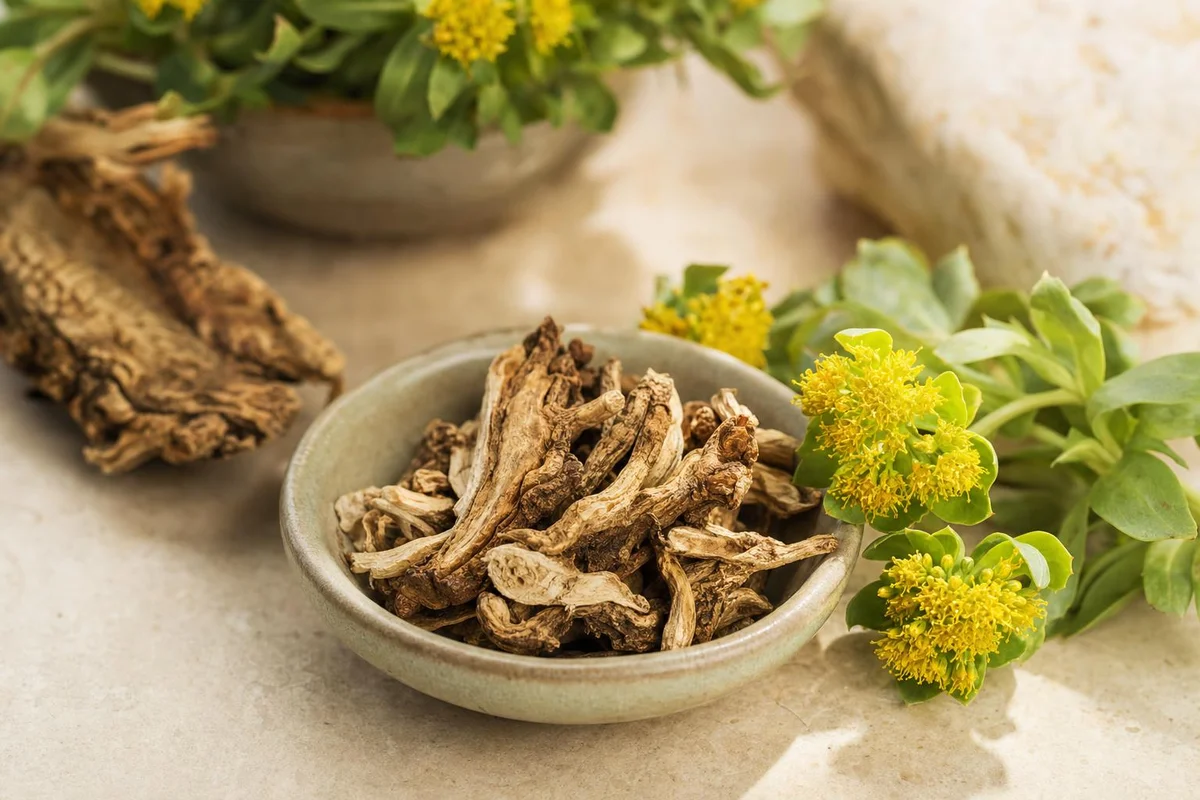
Rhodiola rosea is a flowering plant that grows in cold, high-altitude regions of Europe, Asia, and North America. The root is the part most commonly used in supplements.
Modern Rhodiola extracts are often standardized for rosavins and salidroside. These marker compounds help make products more consistent, although standardization does not guarantee clinical benefit.
Rhodiola is usually grouped with stress and fatigue supports rather than classic nutrient supplements. In an ADHD context, that makes it most relevant for people whose attention worsens when they are exhausted, stressed, overloaded, or recovering poorly.
How Rhodiola Works
Rhodiola appears to influence stress-response systems, fatigue signaling, and monoamine-related pathways. Research often discusses the HPA axis, cortisol regulation, serotonin, dopamine, norepinephrine, and cellular stress responses.
Those mechanisms are plausible for stress resilience and fatigue support, but they should not be overstated. ADHD is not simply an adaptogen deficiency or a stress-response problem. Stress and fatigue can amplify ADHD symptoms, but reducing fatigue does not necessarily treat the underlying attention disorder.
Readers trying to understand where stress, fatigue, and attention overlap may find how focus and motivation work and why fatigue is biologically complex useful.
What the Evidence Says About ADHD
Direct ADHD-specific evidence for Rhodiola is very limited. There are not enough strong trials in diagnosed ADHD populations to say Rhodiola improves core symptoms such as inattention, impulsivity, or executive dysfunction.
The more relevant research comes from stress and fatigue studies:
This table scrolls horizontally on small screens. Use Tab to focus the table region, then scroll with arrow keys or touch.
| Evidence area | What it suggests | ADHD relevance |
|---|---|---|
| Mental fatigue | Some studies report reduced fatigue during demanding periods | Indirect but relevant to fatigue-sensitive focus |
| Stress resilience | Some trials show improvements in perceived stress or burnout-like symptoms | May matter when stress worsens attention |
| Cognitive performance | Some studies show modest effects under strain | Context-dependent, not ADHD-specific |
| Direct ADHD evidence | Sparse and preliminary | Not enough for strong claims |
| Medication combinations | Limited data | Requires clinical supervision |
The evidence grade for ADHD symptom improvement is low to preliminary. Rhodiola belongs in the "possible stress/fatigue support" category, not the core evidence category in the best supplements for ADHD guide.
ADHD Supplement Checklist
Want a safer supplement checklist? Review what to test first before adding iron, zinc, vitamin D, or magnesium.
Rhodiola for Focus, Stress, Fatigue, and Executive Function
Rhodiola may be most relevant when the problem is not pure distractibility, but focus deterioration under strain. Examples include afternoon fatigue, sustained work fatigue, stress-related mental fog, or poor resilience during high-demand weeks.
The most defensible claim is narrow: Rhodiola may help some people feel less mentally fatigued or maintain performance under stress. It should not be expected to reliably improve procrastination, impulse control, emotional regulation, school performance, or core executive function by itself.
For ADHD, Rhodiola fits best inside a careful ADHD stack guide approach. Test one variable, track specific outcomes, and stop if the benefit is unclear or the side-effect tradeoff is poor.
Rhodiola vs Other ADHD and Focus Supports
Rhodiola is closest to stress-support articles such as Ashwagandha for ADHD, but the two are not interchangeable. Rhodiola is often experienced as more activating, while ashwagandha is often positioned as more calming or sleep-adjacent. Individual response varies.
Rhodiola also differs from L-tyrosine for ADHD. L-tyrosine is a catecholamine precursor most relevant to acute demand. Rhodiola has broader stress and fatigue framing. Both have limited direct ADHD evidence.
Compared with choline-focused options such as citicoline for ADHD or Alpha-GPC for ADHD, Rhodiola is less about acetylcholine and more about stress/fatigue context. Compared with L-theanine for ADHD, Rhodiola may be more activating and less calming.
If fatigue or brain fog may be driven by low iron, low vitamin D, sleep problems, thyroid issues, or other correctable factors, start with nutrient deficiencies and ADHD and ADHD blood tests before assuming an adaptogen is the answer.
Dosing and Timing
Rhodiola studies commonly use standardized extracts in the 200 mg to 600 mg per day range, often standardized around rosavins and salidroside. Practical use often starts around 200 mg to 400 mg earlier in the day.
Morning or early afternoon timing is usually preferred because some people find Rhodiola stimulating. Late-day use may worsen insomnia or restless sleep.
Some studies look at acute use during demanding periods, while others use daily dosing over several weeks. A conservative trial should track fatigue, focus, anxiety, irritability, and sleep for 2-4 weeks before deciding whether the supplement is worth continuing.
Side Effects and Safety
Rhodiola is generally well tolerated in many adult studies, but side effects can occur. Reported issues include dizziness, dry mouth, gastrointestinal discomfort, headache, insomnia, anxiety, irritability, or a wired feeling.
Use extra caution with:
- Stimulant or non-stimulant ADHD medications
- Antidepressants or other monoamine-active medications
- Bipolar disorder or mania risk
- Panic, severe anxiety, irritability, or insomnia
- High blood pressure or cardiovascular concerns
- Pregnancy, nursing, pediatric use, or complex medical conditions
Rhodiola may be too activating for some people. Anyone with bipolar disorder, significant anxiety, medication combinations, or cardiovascular concerns should involve a qualified clinician before use.
Practical Decision Framework
Use Rhodiola only when the target is specific and stress/fatigue related.
- Name the problem. Examples: afternoon fatigue, focus during stressful weeks, burnout-like mental fog, or low resilience after poor sleep.
- Check foundations first. Sleep, food timing, iron status, vitamin D, thyroid, medication fit, and workload may matter more.
- Choose one variable. Do not start Rhodiola alongside caffeine changes, L-tyrosine, choline supplements, and new adaptogens.
- Start earlier and lower. Morning dosing reduces sleep disruption risk.
- Track both benefit and cost. Fatigue scores, task endurance, anxiety, irritability, and sleep are all relevant.
- Stop if activation outweighs benefit. More energy is not useful if it comes with worse sleep, anxiety, or emotional volatility.
ADHD Stack Guide
Building a supplement stack? Read the ADHD Stack Guide to avoid overlapping ingredients and unrealistic expectations.
FAQ
Does Rhodiola help ADHD?
Direct ADHD evidence is very limited. Rhodiola may help some people with stress-related fatigue or focus decline, but it has not been proven to treat core ADHD symptoms.
Is Rhodiola good for focus?
It may support focus when fatigue or stress is the limiting factor. Evidence for baseline ADHD attention improvement is indirect and preliminary.
Can Rhodiola help mental fatigue?
Mental fatigue is one of the more relevant areas of Rhodiola research. Some studies suggest modest benefit during demanding or stressful periods, but individual response varies.
Is Rhodiola better for stress than ADHD?
Yes, based on current evidence. The research case is stronger for stress and fatigue support than for ADHD symptom treatment.
Does Rhodiola increase dopamine?
Rhodiola may influence monoamine systems, including dopamine and norepinephrine, but that does not mean it reliably improves ADHD. Mechanism is not the same as outcome.
Can Rhodiola replace ADHD medication?
No. Rhodiola is not an ADHD treatment and should not replace medication, behavioral care, sleep treatment, nutrition correction, or professional guidance.
Can Rhodiola be taken with stimulants?
There is limited evidence on combining Rhodiola with stimulant medication. Because both may affect arousal or monoamine-related systems, combination use should be discussed with a clinician.
Can Rhodiola cause anxiety or insomnia?
Yes, some people report anxiety, irritability, overstimulation, or insomnia. Morning dosing and lower starting doses may reduce risk, but some people are simply not good candidates.
How much Rhodiola should I take?
Adult studies commonly use 200 mg to 600 mg daily of standardized extract. A cautious trial usually starts low. Children, medically complex users, and people taking medication need professional guidance.
Is Rhodiola better than ashwagandha?
Not universally. Rhodiola is often more activating and fatigue-focused; ashwagandha is often more calming. The better choice depends on the target, tolerability, and safety context.
Conclusion
Rhodiola rosea is a plausible stress and fatigue support, and some non-ADHD research suggests modest benefits for mental fatigue and performance under demanding conditions. That makes it relevant to ADHD only when stress and fatigue are major contributors to focus problems.
The direct ADHD evidence is limited. Rhodiola should not be framed as a treatment, cure, or replacement for professional care. The safest interpretation is cautious: it may be worth a tracked trial for selected adults with stress-related fatigue, but expectations should stay modest and safety should come first.
Next Steps & Practical Resources
Review these guides to translate evidence into safe, personalized actions.
Database
Compare Options
Contrast herbs and compounds side-by-side on evidence metrics.
Formulation
Read the Stack Guide
Learn about safety, synergistic stacking, and dosing guidelines.
Safety First
Check Safety Notes
Scan interactions, side effects, and warning tags for ADHD.
Research List
Join Updates
Receive evidence summaries and new botanical analyses directly.
Free safety checklist
Get the ADHD supplement checklist
Receive our evidence-first supplement checklist, safety reminders, and updates on ADHD nutrient research. No medical claims or personalized advice.
We use your email to send the checklist and occasional evidence-first supplement updates. Unsubscribe anytime. Privacy policy.
Affiliate disclosure
Some pages may include affiliate links. If you buy through those links, The Hippie Scientist may earn a commission at no additional cost to you. Affiliate relationships do not change evidence ratings, safety warnings, product-quality criteria, or editorial conclusions.
Read our affiliate and editorial policy