NOW Foods
NOW Ashwagandha 450 mg
Budget product example for a simple ashwagandha capsule from a widely available supplement brand.
Selection criteria
- • Budget pick for a simple ashwagandha capsule from a widely available supplement brand.
Educational Comparison
Choosing between these three popular options depends on your specific stress presentation. Ashwagandha is an adaptogen suited for chronic, daily tension. L-Theanine is an amino acid that excels at acute, situational stress. Magnesium glycinate is a mineral that addresses baseline physical relaxation and evening recovery.
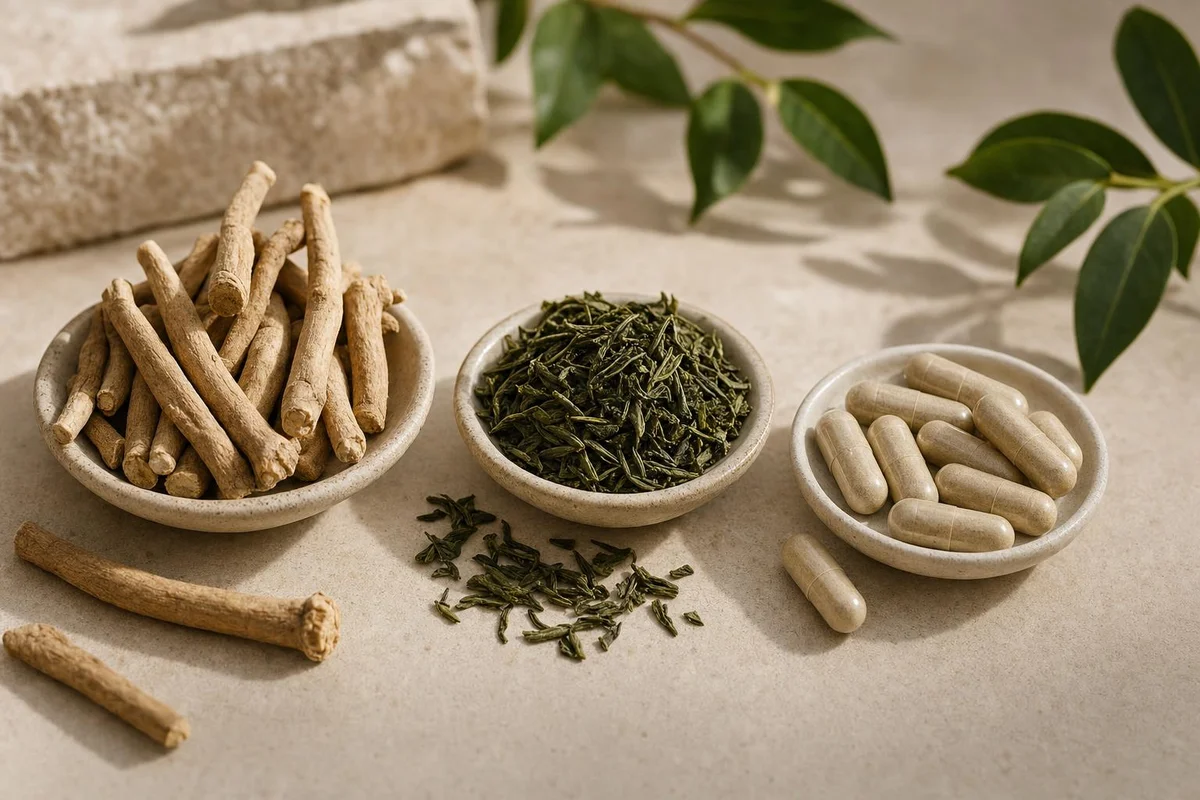
Ashwagandha is usually the better fit for chronic, cortisol-driven stress that builds up over weeks and needs 2-8 weeks of daily use to shift. L-theanine is usually the better fit for acute, situational stress or racing thoughts, working within 30-90 minutes. Magnesium glycinate is usually the better fit for physical muscle tension and evening wind-down.
Sources for this answer
Daily Adaptogen
Best for chronic, ongoing cortisol-driven stress. It requires consistent daily use over 2–8 weeks to show noticeable effects on subjective anxiety scales.
Acute Stress Buffer
Best for acute, situational stress (such as presentations or exams) or racing thoughts. It promotes alpha-wave brain activity, taking effect within 30–90 minutes.
Baseline Relaxation
Best for physical muscle tension and baseline recovery. Using magnesium glycinate in the evening supports sleep wind-down and addresses dietary mineral gaps.
Decision Table
| Factor | Ashwagandha | L-Theanine | Magnesium (Glycinate) |
|---|---|---|---|
| Primary Fit | Chronic, generalized stress & cortisol regulation | Acute situational stress, racing thoughts, jitters | Physical tension, muscle cramps, baseline deficiency |
| Onset Speed | 2 to 8 weeks of daily use | 30 to 90 minutes (rapid) | Days to weeks of steady dosing |
| Primary Mechanism | HPA-axis regulation, cortisol reduction | Glutamate receptor blocker, GABA support | NMDA receptor blocker, muscle relaxation |
| Evidence Grade | Moderate to Strong | Moderate | Limited to Moderate |
| Main Cautions | Pregnancy, thyroid meds, autoimmune conditions | Low blood pressure (hypotension) risk | Severe kidney disease (impaired clearance) |
| Bottom Line | Excellent for long-term daily resilience | Ideal for fast-acting daytime calm | Best basic daily mineral wind-down |
Scenario 1
If your stress manifests as ongoing, physical and mental exhaustion paired with high evening tension, Ashwagandha is generally the more targeted option. It aims to support baseline adaptation, but you must monitor for rare side effects like emotional blunting (anhedonia).
Scenario 2
If you need calm focus during a demanding meeting or to take the edge off caffeine consumption, L-Theanine is the ideal choice. It crosses the blood-brain barrier rapidly to increase alpha-wave activity without inducing grogginess.
Scenario 3
If your stress triggers muscle tightness, jaw-clenching, or sleep-onset disruption, Magnesium glycinate provides the double benefit of glycine (a calming neurotransmitter) paired with highly absorbable elemental magnesium.
Safety & Clinical Cautions
While all three compounds are widely available, they have active physiological targets and must be approached with caution:
FAQ
Many users stack them, particularly in evening routines. However, to identify what actually works for you and avoid compound side effects, we strongly recommend starting with one ingredient at a time and evaluating it for at least a week before adding others.
L-theanine works much faster (usually within 30 to 90 minutes) for acute mental chatter. Magnesium glycinate acts over several days to correct baseline cell levels, though the glycine component can offer mild acute bedtime relaxation.
If ashwagandha is used to support evening calm, a split dose (morning and evening) or a single evening dose is common. If it causes daytime lethargy, move the entire dose to 1 hour before sleep.
Free safety checklist
Get our evidence-based guide on mapping your daily stress pattern, selecting clinically backed dosages, and avoiding adaptogen safety traps. Identify your stress subtype: overactivated cortisol vs. physical exhaustion • Exact clinical dosages and extract standardizations (KSM-66 vs. Shoden) • Safe stacking guidelines to avoid liver and thyroid complications
We use your email to send the checklist and occasional evidence-first supplement updates. Unsubscribe anytime. Privacy policy.
Dig deeper into adaptogen science, stress pathways, and our evidence grading methodology.
Herb
Calming adaptogen that lowers cortisol. Strong human trials, with clear thyroid and autoimmune limits.
Compound
Amino acid that blocks glutamate receptors to promote relaxation and focused attention.
Compound
Essential mineral for muscle relaxation, NMDA pathway regulation, and sleep support.
Guide
How to map your stress pattern (wired vs. tired) to select the right adaptogen.
Some pages may include affiliate links. If you buy through those links, The Hippie Scientist may earn a commission at no additional cost to you. Affiliate relationships do not change evidence ratings, safety warnings, product-quality criteria, or editorial conclusions.
Read our affiliate and editorial policySourcing options
Editor recommended options for clean, third-party tested formulations. Review safety warnings before supplementing.
Affiliate disclosure: we may earn a commission from qualifying links at no extra cost to you. How we stay independent.
Source ledger
8 sources