L-Theanine for Sleep: Benefits, Dosage, Safety, and How It Compares
By Will
Last updated:
A practical evidence-based guide to L-theanine for sleep, including relaxation, alpha waves, dosage, safety, timing, and how it compares with magnesium and ashwagandha.

Quick Verdict
Does L-Theanine Help With Sleep?
- ▸L-theanine may help most when racing thoughts, stress, or mental tension are the main barrier to falling asleep — not when the problem is primarily physical fatigue or circadian disruption.
- ▸It is not usually a strong sedative. L-theanine promotes relaxation and calms mental arousal rather than producing direct drowsiness.
- ▸It may be better for relaxation than for severe insomnia. The evidence base for direct sleep-outcome improvement is more limited than for supplements like ashwagandha in stressed populations.
- ▸It pairs naturally with magnesium or ashwagandha in a sleep stack — L-theanine for mental relaxation, magnesium for physical tension, and ashwagandha for chronic stress adaptation.
What Is L-Theanine?
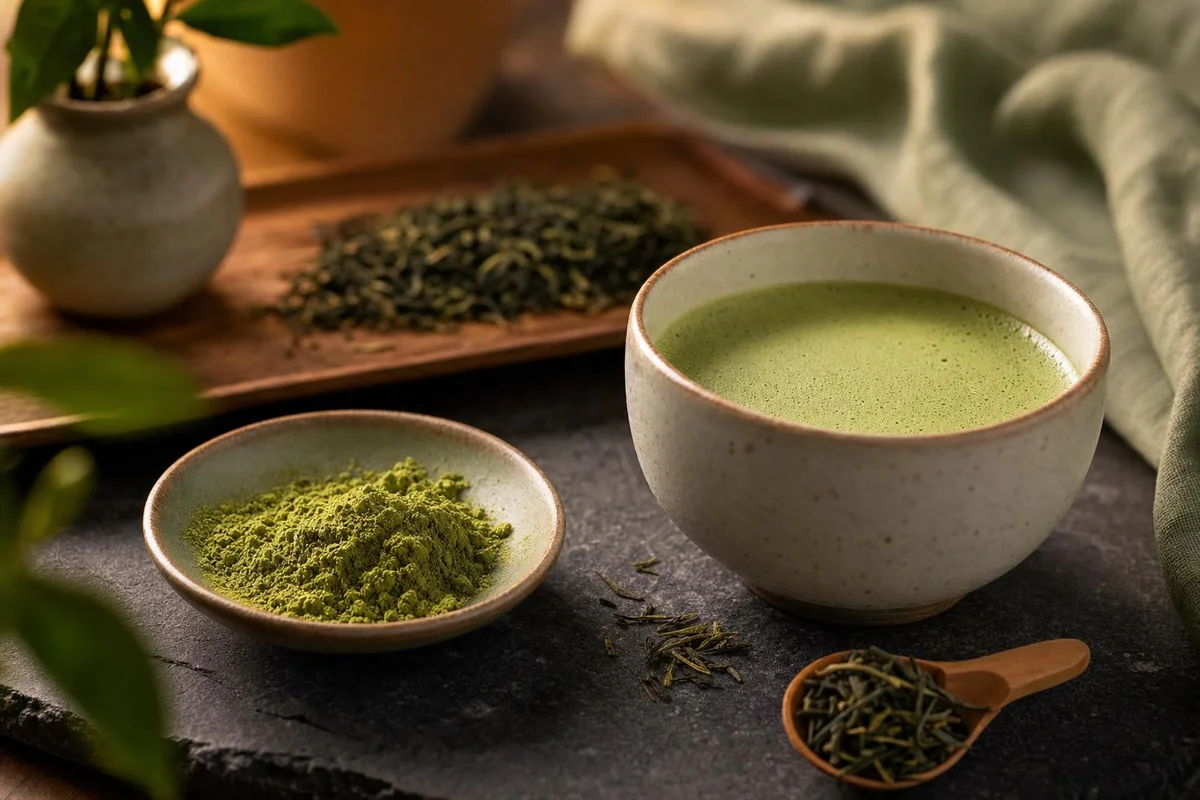
L-theanine is a non-protein amino acid found naturally in tea leaves (Camellia sinensis), and in small amounts in some mushrooms. It is one of the primary bioactive compounds responsible for the characteristic umami and calming qualities of green and black tea, and has been consumed by humans as part of tea for centuries.
As a supplement, L-theanine is most commonly used for:
- Relaxation and stress reduction without sedation
- Daytime focus and attention, often combined with caffeine
- Evening wind-down and pre-sleep relaxation
- Reducing anxiety and mental tension
L-theanine is not the same as melatonin, GABA, or magnesium. It does not directly signal the circadian clock (melatonin), act as the primary inhibitory neurotransmitter (GABA), or function as an essential mineral (magnesium). Its mechanisms are more indirect and modulatory in nature.
During the day, L-theanine is frequently paired with caffeine — a combination studied for attentional benefits. For sleep use, caffeine-free standalone L-theanine supplements (or caffeine-free tea forms) are appropriate. Green tea itself contains both L-theanine and caffeine, making it poorly suited for evening sleep support.
How L-Theanine May Affect Sleep
L-theanine's proposed effects on sleep are primarily indirect — it appears to reduce the mental arousal and stress-related hyperactivation that can delay sleep onset, rather than producing direct sedation.
Alpha-Wave Activity
One of the most replicated findings is that L-theanine appears to increase alpha brainwave activity — the neural oscillation pattern associated with calm, wakeful relaxation. This effect has been observed in EEG studies within roughly 30–60 minutes of ingestion. Alpha waves are prominent during relaxed wakefulness and the early stages of the sleep transition, which may support a smoother onset of sleep in people who are mentally overactivated at bedtime.
Relaxation Without Heavy Sedation
Unlike benzodiazepines, antihistamines, or valerian at higher doses, L-theanine does not typically produce strong drowsiness. The experience most often described is a quieting of mental noise without impairment of cognitive function — which may be why it is also used during the day for calm focus. For sleep, this means it may lower the activation threshold for sleep onset without making the next morning feel heavy.
Glutamate / GABA Modulation
Mechanistic evidence suggests L-theanine may modulate glutamate (excitatory) and GABA (inhibitory) neurotransmitter systems — though the precise mechanisms at typical supplemental doses in humans are not fully characterized. It has structural similarity to glutamate and may interact with glutamate receptors, potentially reducing excitatory tone. Some preclinical data also suggests effects on GABA-A receptor activity. These pathways remain under investigation and should be described cautiously.
Stress-Response Modulation
L-theanine has been studied for its effects on physiological stress markers, including heart rate, salivary cortisol, and self-reported anxiety. Some trials suggest attenuation of acute stress responses. For sleep, this may be relevant because elevated evening stress physiology (elevated cortisol, increased heart rate, heightened sympathetic tone) is a primary driver of delayed sleep onset and fragmented sleep.
Reduced Mental Arousal Before Bed
The combination of alpha-wave promotion, reduced stress reactivity, and possible glutamate modulation may collectively reduce the mental arousal state that keeps cognitively overactive individuals awake. This makes L-theanine most likely to show benefit in people whose primary sleep complaint is an inability to quiet racing thoughts — rather than difficulty maintaining sleep once asleep, or early morning awakening unrelated to stress.
Evidence Summary
Evidence Snapshot
Evidence: LimitedL-Theanine & Sleep Quality
Human evidence
Some controlled trials suggest L-theanine may improve subjective sleep quality, sleep satisfaction, and reduce sleep latency — particularly in populations with anxiety, stress, or hyperarousal at baseline. Evidence specific to sleep outcomes (distinct from general relaxation) is less robust than the relaxation literature. Direct sleep RCT evidence is limited; most well-designed trials have focused on stress and anxiety outcomes, from which sleep benefits are often inferred.
Research signal
Alpha-wave induction is the most replicated finding in EEG studies. Proposed modulation of glutamate/GABA signaling is biologically plausible but incompletely characterized at typical human doses. Stress-response attenuation (cortisol, heart rate) is supported by some trials. Mechanistic data is reasonably coherent but clinical translation to sleep endpoints requires further trial-level confirmation.
Safety profile
Generally well-tolerated in available trials and in long-term tea consumption. Reported adverse effects are mild (headache, dizziness, GI discomfort) and uncommon. No major drug interactions established, though caution is warranted with sedatives and blood pressure medications. Pregnancy/breastfeeding safety data is insufficient.
Key studies referenced:
- L-theanine and sleep quality in boys with ADHD — naturalistic sleep improvement observed
- L-theanine and stress responses — attenuation of physiological arousal markers in multiple trials; see Hidese 2019 (PMID 31758301)
- L-theanine alpha-wave EEG studies — increased alpha activity within 30–60 min of ingestion
Full reference table in Sources section below.
Dosage and Timing
Dosage Reference — Sleep Protocols
This table scrolls horizontally on small screens. Use Tab to focus the table region, then scroll with arrow keys or touch.
| Use Case | Dose Range | Timing | Notes |
|---|---|---|---|
| Pre-sleep relaxation | 100–200 mg | 30–60 min before bed | Caffeine-free product only; start at lower end |
| Evening wind-down | 100–200 mg | 1–2 hours before bed | Can be taken earlier as part of wind-down routine |
| Stack with magnesium | 100–200 mg | Both 30–60 min before bed | Introduce one at a time before combining |
Do not use caffeinated tea or caffeine-containing L-theanine extracts near bedtime.
Practical timing notes:
- Most commercial L-theanine products offer 100 mg or 200 mg per serving — starting at the lower end is reasonable for a first trial.
- If using L-theanine earlier in the evening for general wind-down rather than as a direct pre-sleep supplement, the timing flexibility is wider.
- Avoid caffeine-containing products near bedtime. Green tea extract products and “nootropic” blends often combine L-theanine with caffeine — these are not appropriate for sleep use.
L-Theanine vs Magnesium for Sleep
Both L-theanine and magnesium are commonly used for sleep support, but they suit different patterns of sleep difficulty.
This table scrolls horizontally on small screens. Use Tab to focus the table region, then scroll with arrow keys or touch.
| Factor | L-Theanine | Magnesium |
|---|---|---|
| Primary benefit | Mental relaxation, quieting racing thoughts | Physical relaxation, muscle tension, mineral support |
| Best suited for | Mind-racing at bedtime, stress-driven mental arousal | Body tension, restlessness, general sleep quality |
| Main mechanism | Alpha-wave induction, glutamate modulation, stress attenuation | NMDA antagonism, GABA support, melatonin pathway, muscle relaxation |
| Evidence strength | Limited (direct sleep); Moderate (relaxation/stress) | Limited–Moderate (sleep), stronger in deficient populations |
| First-line choice? | When mental tension is the dominant issue | Usually a better baseline first choice for most people |
| Can combine? | Yes | Yes — reasonable relaxation stack |
Magnesium is generally the more reasonable first supplement to try because it addresses a wider range of sleep barriers (mineral repletion, muscle relaxation, nervous system excitability), has fewer form-selection pitfalls, and has a broader safety dataset. L-theanine becomes a stronger candidate when the problem is specifically mental: a busy, anxious mind that won't quieten even when the body feels tired.
For a detailed evidence review of magnesium for sleep, see the Magnesium for Sleep article and the Magnesium Types for Sleep guide.
L-Theanine vs Ashwagandha for Sleep
Both L-theanine and ashwagandha are used to address stress-related sleep difficulties, but they work on different timescales and suit different patterns of chronic vs acute stress.
This table scrolls horizontally on small screens. Use Tab to focus the table region, then scroll with arrow keys or touch.
| Factor | L-Theanine | Ashwagandha |
|---|---|---|
| Effect timescale | Shorter-term relaxation; effects may be noticeable within hours | Stress adaptation over weeks; effects typically at 6–8 weeks |
| Best suited for | Situational or acute mental tension at bedtime | Chronic stress as the primary driver of poor sleep |
| Trial speed | Easier to trial quickly — effects (or lack thereof) apparent within days | Requires weeks to properly evaluate; do not assess on a few nights |
| Evidence strength (sleep) | Limited direct sleep RCTs | Moderate — multiple RCTs in stressed adults |
| Safety profile | Fewer contraindications; no pregnancy / thyroid concerns established | Avoid in pregnancy; thyroid, autoimmune cautions |
If you want to trial a relaxation supplement quickly and your main complaint is an overactive mind at bedtime, L-theanine may give a faster signal (positive or null). If chronic, ongoing stress is your primary sleep disruptor and you are willing to commit to a 6–8 week trial, ashwagandha has more direct evidence for sleep quality improvement in that population.
For the full clinical review of ashwagandha for sleep, see the Ashwagandha for Sleep article and the Ashwagandha vs Magnesium for Sleep comparison.
Can You Combine L-Theanine With Magnesium or Ashwagandha?
Combining these supplements is a common approach in sleep stacks, and for most healthy adults it is generally considered reasonable. However, cautious language is warranted: direct combination clinical trials are limited, and the evidence base for any specific multi-supplement combination is thinner than for each supplement studied individually.
L-Theanine + Magnesium
A reasonable relaxation stack. L-theanine targets mental calm; magnesium addresses physical tension and NMDA/GABA pathways. No known adverse interaction. Take both 30–60 minutes before bed.
L-Theanine + Ashwagandha
A stress and relaxation support combination. L-theanine may offer more immediate relaxation, while ashwagandha works on chronic HPA axis adaptation over weeks. No established adverse interaction in healthy adults.
All Three (L-Theanine + Magnesium + Ashwagandha)
A possible sleep stack. Direct combination trials for all three together are likely limited or absent — no combination trials have been identified in the source registry. Combining three supplements simultaneously makes it difficult to identify what is helping or causing side effects.
Practical approach for combining:
- Start one supplement at a time. Assess your response over 1–2 weeks before adding a second.
- If you take prescription sedatives, benzodiazepines, z-drugs, or psychiatric medications, consult a clinician before adding any sleep supplement.
- Starting all three on the same night makes it impossible to attribute effects or side effects to any single supplement.
L-Theanine Product Options
These products represent the dose ranges and forms most consistent with L-theanine sleep and relaxation use. Affiliate links support this site at no additional cost to you.
L-Theanine — Lower Dose
L-Theanine 100 mg
A conservative starting dose for pre-sleep relaxation. Caffeine-free standalone supplement. Good for sensitive users or first-time trial.
View on Amazon →L-Theanine — Standard Dose
L-Theanine 200 mg
The most common dose used in relaxation and sleep-support trials. Caffeine-free only. Avoid “focus blend” products containing caffeine for nighttime use.
View on Amazon →L-Theanine + Magnesium Stack
L-Theanine & Magnesium Glycinate
Combined mental and physical relaxation support. Look for products with L-theanine 100–200 mg and magnesium glycinate 200–400 mg elemental — no caffeine or melatonin added.
View on Amazon →Caffeine-Free Sleep Stack
Sleep Support Stack (No Caffeine)
Multi-ingredient sleep formulas combining L-theanine with magnesium and/or ashwagandha. Verify that the product is caffeine-free and contains clinically relevant dose amounts before purchasing.
View on Amazon →Safety and Side Effects
Educational Safety Notice
Safety Summary — L-Theanine for Sleep
- Generally well-tolerated in typical supplemental use. L-theanine has a long history of consumption as a tea component and has been studied in clinical trials without major safety signals at standard doses.
- Common mild side effects may include headache, dizziness, and GI discomfort — these are reported infrequently in trials and are not specific to sleep-dose ranges.
- Sedative medications: L-theanine may add to the CNS-depressant effects of prescription sedatives, benzodiazepines, z-drugs, or other sleep medications. Do not combine without clinician guidance.
- Blood pressure medications: Some evidence suggests L-theanine may have mild blood pressure-lowering effects. Use with caution if you take antihypertensive medications.
- Psychiatric medications: Consult a clinician before combining L-theanine with anxiolytics, antidepressants, or antipsychotics.
- Pregnancy and breastfeeding: Insufficient human safety data for supplemental L-theanine during pregnancy or breastfeeding. Consult a clinician before use.
- Do not use to cover up severe insomnia. Persistent insomnia, sleep apnea symptoms, or major daytime impairment warrant clinical evaluation. L-theanine is not a substitute for medical assessment or CBT-I.
Who Should Try It?
- Try L-theanine if:Racing thoughts, mental chatter, or stress-driven mental arousal keep you awake at bedtime. It is most likely to show benefit in this pattern.
- Try magnesium first if:Muscle tension, physical restlessness, or general sleep quality without a strong mental arousal component is your main issue. Magnesium glycinate is typically the better first-line sleep supplement for most people.
- Try ashwagandha if:Chronic, ongoing stress is the primary driver of your sleep problems and you are willing to commit to a 6–8 week trial. Ashwagandha has more direct sleep-outcome evidence in chronically stressed populations.
- Consult a sleep specialist or doctor if:Sleep problems are severe, chronic (more than 3 months), or include symptoms of sleep apnea (loud snoring, witnessed pauses, gasping, excessive daytime sleepiness). No supplement addresses obstructive sleep apnea, and supplements are not a substitute for clinical evaluation.
What Not To Do
- ✕Do not take caffeinated green tea at bedtime for L-theanine content. Green tea contains caffeine alongside L-theanine; for sleep purposes, use caffeine-free standalone supplements only.
- ✕Do not stack five sleep aids at once. Adding L-theanine on top of melatonin, magnesium, ashwagandha, and valerian simultaneously makes it impossible to know what is working and increases the risk of additive effects.
- ✕Do not assume “natural” means risk-free. L-theanine has drug interaction potential (sedatives, blood pressure medications) and populations who should avoid it or use it cautiously (pregnant/breastfeeding, on sedative medication).
- ✕Do not megadose. Evidence does not support dose escalation beyond studied ranges, and very high doses of any supplement increase the risk of adverse effects without established additional benefit.
- ✕Do not ignore sleep apnea signs. Loud snoring, witnessed breathing pauses, gasping awake, or severe daytime sleepiness should prompt medical evaluation — not supplementation. Sleep apnea is common, underdiagnosed, and not addressable by any supplement.
- ✕Do not mix with prescription sedatives (benzodiazepines, z-drugs, barbiturates) without medical advice. The combination may produce excessive CNS depression.
Frequently Asked Questions
Does L-theanine make you sleepy?
Not in the way a sedative does. L-theanine appears to promote a state of calm alertness by increasing alpha-wave activity in the brain, which may ease the mental transition toward sleep. It is not a direct sedative and does not reliably cause drowsiness on its own. People who find it most useful for sleep typically report that it helps quiet mental chatter rather than producing heavy tiredness.
How long before bed should I take L-theanine?
A commonly used timing is 30–60 minutes before bed. Some people take it earlier in the evening as part of a general wind-down routine. Avoid L-theanine products that also contain caffeine when using it for sleep purposes — these are intended for daytime focus use and the caffeine content would be counterproductive near bedtime.
Is L-theanine better than magnesium for sleep?
They address different aspects of sleep difficulty. L-theanine may be better suited when racing thoughts or mental tension are the primary barrier to sleep. Magnesium may be more helpful when physical tension, restlessness, or suboptimal mineral status is the main issue. For most people without a specific stress-driven sleep problem, magnesium glycinate is a reasonable first choice. L-theanine becomes a stronger candidate when the mind-won't-quiet pattern is dominant.
Can I take L-theanine with magnesium?
For most healthy adults, yes. L-theanine and magnesium work through different mechanisms and no significant adverse interaction between them is established. They are commonly combined in sleep stacks. As with any new supplement, start one first and assess your response before adding a second.
Can I take L-theanine with ashwagandha?
Generally yes, for healthy adults without relevant contraindications. L-theanine may offer shorter-term relaxation support, while ashwagandha addresses chronic stress adaptation over weeks. They complement each other conceptually, though direct combination clinical trials are limited. Start one at a time to identify effects before combining.
Is L-theanine safe every night?
L-theanine has a generally favorable safety profile in typical supplemental use based on available data. It has been consumed in significant quantities as a component of tea for centuries. However, formal long-term supplementation safety data beyond several months is limited. At standard doses (100–200 mg), daily use appears well-tolerated in healthy adults. Consult a healthcare provider if you take sedative medications, have psychiatric conditions, or are pregnant or breastfeeding.
Sources
This table scrolls horizontally on small screens. Use Tab to focus the table region, then scroll with arrow keys or touch.
| # | Study | Authors | Year | Link |
|---|---|---|---|---|
| 1 | L-theanine sleep evidence — sleep quality outcomes in clinical populations | — | — | References being compiled |
| 2 | L-theanine stress/anxiety evidence — stress marker attenuation, alpha-wave induction | — | — | PMID 31758301 (Hidese 2019) |
| 3 | L-theanine safety evidence — adverse event profile in clinical trials and post-market surveillance | — | — | References being compiled |
| 4 | L-theanine + caffeine evidence — combination effects on cognitive performance (daytime use; cited for contrast) | — | — | References being compiled |
| 5 | L-theanine pediatric/ADHD sleep evidence | — | — | Not included — evidence under review |
| 6 | Combination evidence — L-theanine + magnesium or L-theanine + ashwagandha co-administration | — | — | No combination trial identified in source registry |
Magnesium evidence references are shared with the Magnesium for Sleep article. Ashwagandha evidence references are shared with the Ashwagandha for Sleep article.
Affiliate-ready sourcing
Product recommendations
Use these as sourcing starting points, not medical recommendations. Product quality, dose, and fit still need review.
Affiliate disclosure: we may earn a commission from qualifying links at no extra cost to you. How we stay independent.
Free safety checklist
Get future research notes by email
Evidence-first supplement updates, safety context, and new guide announcements. No diagnosis, treatment, or personal medical advice.
We use your email to send the checklist and occasional evidence-first supplement updates. Unsubscribe anytime. Privacy policy.
Newsletter
Continue with the newsletter archive
Short notes built for cautious supplement decisions.