We use privacy-friendly analytics. Read our privacy policy.DNT/GPC detected: tracking stays off.
Pathway supernode
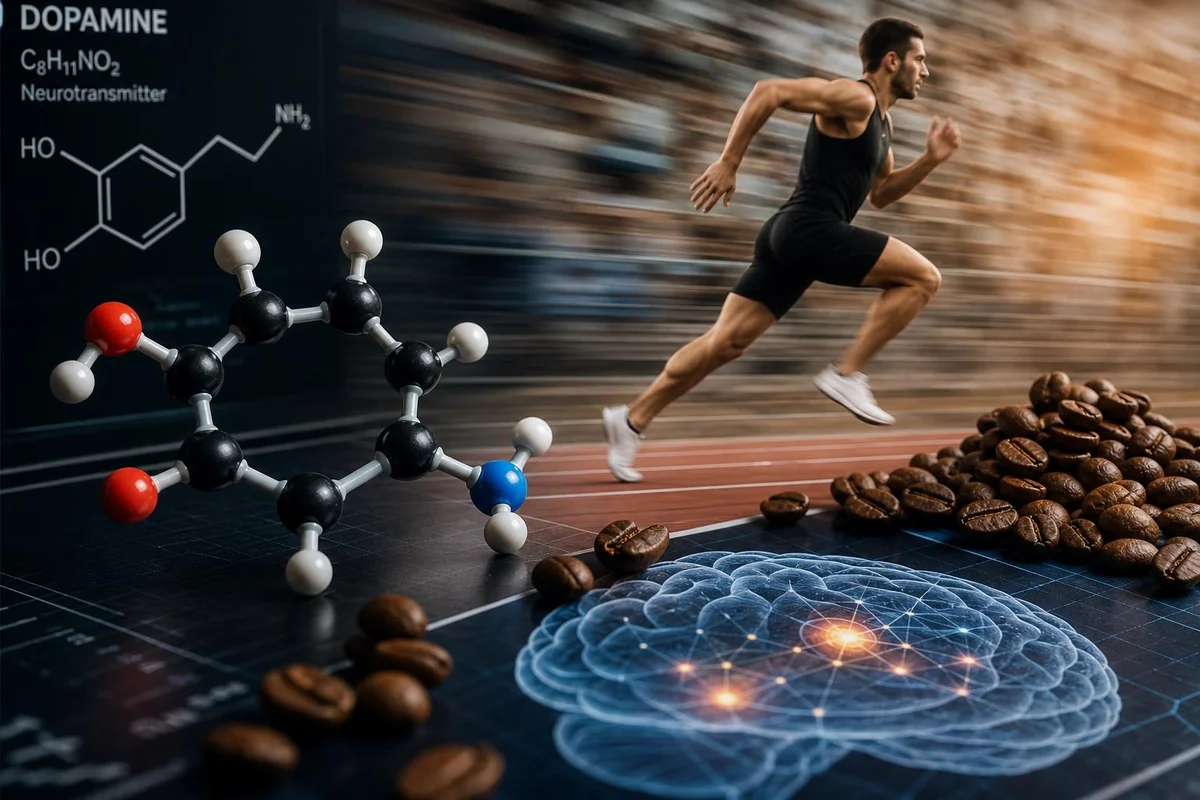
Dopamine Pathway: Motivation, Focus, Reward Prediction, and the Problem with “Dopamine Boosters”
Dopamine is often marketed as the brain’s pleasure switch, but that framing is too shallow for useful decisions. Dopaminergic signaling helps the brain assign salience, learn from outcomes, pursue rewards, regulate movement, and decide whether effort feels worth it. This page explains the pathway without turning every focus, fatigue, or motivation problem into a supplement shopping list.
Dopamine is better understood as part of motivation, learning, and salience — not simply pleasure.
Dopamine is not just pleasure
Dopamine is deeply involved in motivation, prediction, learning, salience, movement, and effort allocation. Reducing it to a “pleasure chemical” leads to bad supplement decisions because the real question is often drive, reinforcement, or task engagement — not pleasure alone.
Motivation is a system, not a switch
Low motivation can come from sleep debt, depression, stress load, under-recovery, ADHD, low reward clarity, medication effects, or metabolic fatigue. A dopamine pathway page should help readers ask better questions before assuming a dopamine supplement is the answer.
More activation can backfire
Pushing stimulation too hard can worsen anxiety, irritability, impulsivity, insomnia, appetite disruption, and crash cycles. For many readers, the best focus strategy is not stronger activation, but cleaner energy, better sleep, and fewer competing rewards.
The premium decision framework
The useful question is not “how do I raise dopamine?” A better question is what problem needs solving: inconsistent focus, low effort tolerance, stimulant crash, burnout, poor sleep, reward chasing, or true clinical symptoms. Dopamine-related supplements can sit anywhere from gentle support to high-risk pathway manipulation.
1Is the goal motivation, focus, mood, fatigue resistance, reward sensitivity, or stimulant replacement?
2Is the ingredient supporting precursor availability, stress resilience, wakefulness, or direct dopamine pathway manipulation?
3Could sleep debt, caffeine load, nicotine, stimulant medication, depression, ADHD, or burnout explain the problem better than a supplement gap?
4Would pushing activation create risk around anxiety, insomnia, mania, blood pressure, appetite, dependence, or medication interactions?
Related systems
Ingredients and guides to compare carefully
These related pages show why dopamine-oriented decisions need nuance. A precursor, adaptogen, L-DOPA source, and focus guide do not belong in the same risk category, even when marketers flatten them into “dopamine support.”
If the goal is practical focus, continue into the focus guide cluster. If the goal is fatigue, compare sleep, stress, and recovery explanations before assuming dopamine is the limiting factor. If the goal is product selection, use the safety checker before combining stimulants, precursors, adaptogens, nicotine, caffeine, or prescription medications.