Pathway Supernode
GABA Pathway
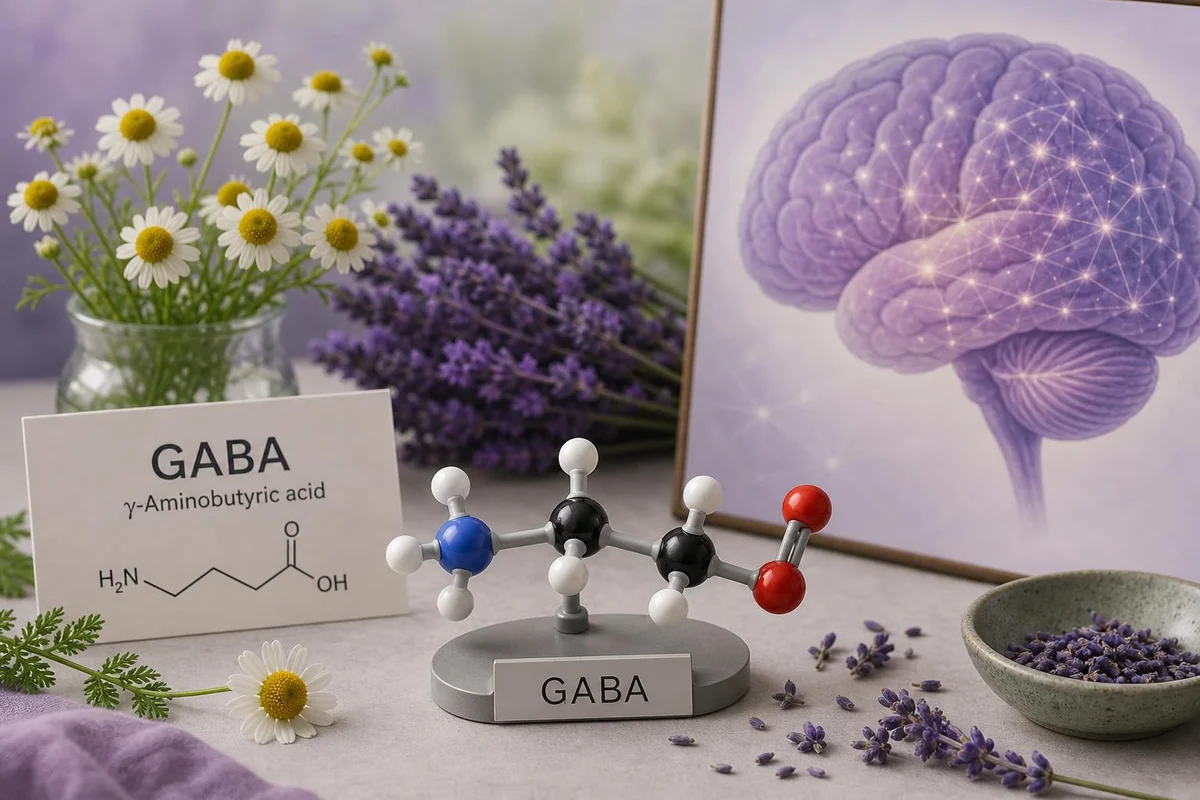
GABA (gamma-aminobutyric acid) is one of the primary inhibitory neurotransmitter systems involved in nervous-system downregulation, relaxation, stress modulation, and sleep-related signaling.
Educational exploration of GABAergic systems helps contextualize calming herbs, psychoactive ethnobotanicals, sleep-supportive compounds, anxiolytic mechanisms, and inhibitory neuropharmacology.
Mechanism Education
Why inhibitory signaling matters
GABAergic signaling helps regulate excitatory nervous-system activity. Educational discussions around calming herbs, sedation, stress regulation, and sleep often intersect with inhibitory pathway systems.
Kava
Traditional calming psychoactive herb associated with stress modulation and inhibitory signaling systems.
L-Theanine
Calming amino acid associated with relaxation, alpha-wave activity, and stress-response modulation.
Valerian
Traditional calming herb commonly associated with sleep-supportive and inhibitory signaling systems.
Blue Lotus
Historically used psychoactive ethnobotanical associated with calming experiential effects.
A simple GABA mnemonic
Think of GABA as the brain's brake pedal: gamma aminobutyric acid helps slow excitatory signaling so neurons do not keep firing unchecked. The mnemonic is imperfect, but useful: GABA = Go A Bit Asleep when signaling shifts toward inhibition, calming tone, and sleep pressure.
GABA-A receptor activity is the best-known fast inhibitory pathway. Increasing GABA activity is not automatically better, because too much inhibition can mean sedation, impaired coordination, or dangerous additive effects with alcohol, benzodiazepines, or other central nervous system depressants.
Related Educational Systems
Continue exploring neuropharmacology
GABA in practice
GABA is the brain's primary inhibitory neurotransmitter: it puts the brakes on neuronal firing. Benzodiazepines and alcohol enhance GABA-A receptor activity, which is why they can produce sedation, anxiolysis, and at high doses, respiratory depression. Key supplements such as magnesium and L-theanine intersect with GABA signaling through different mechanisms, but they are not substitutes for medical care. Kava and valerian also intersect with GABA-related pathways but carry safety concerns, including liver caution for kava and additive sedative effects for valerian. GABA supplements themselves may have limited brain penetration because the blood-brain barrier limits entry. For most people seeking general calming support, magnesium glycinate or L-theanine are more conservative starting points than sedative stacks.
Source ledger
References
3 sources