We use privacy-friendly analytics. Read our privacy policy.DNT/GPC detected: tracking stays off.
Pathway supernode
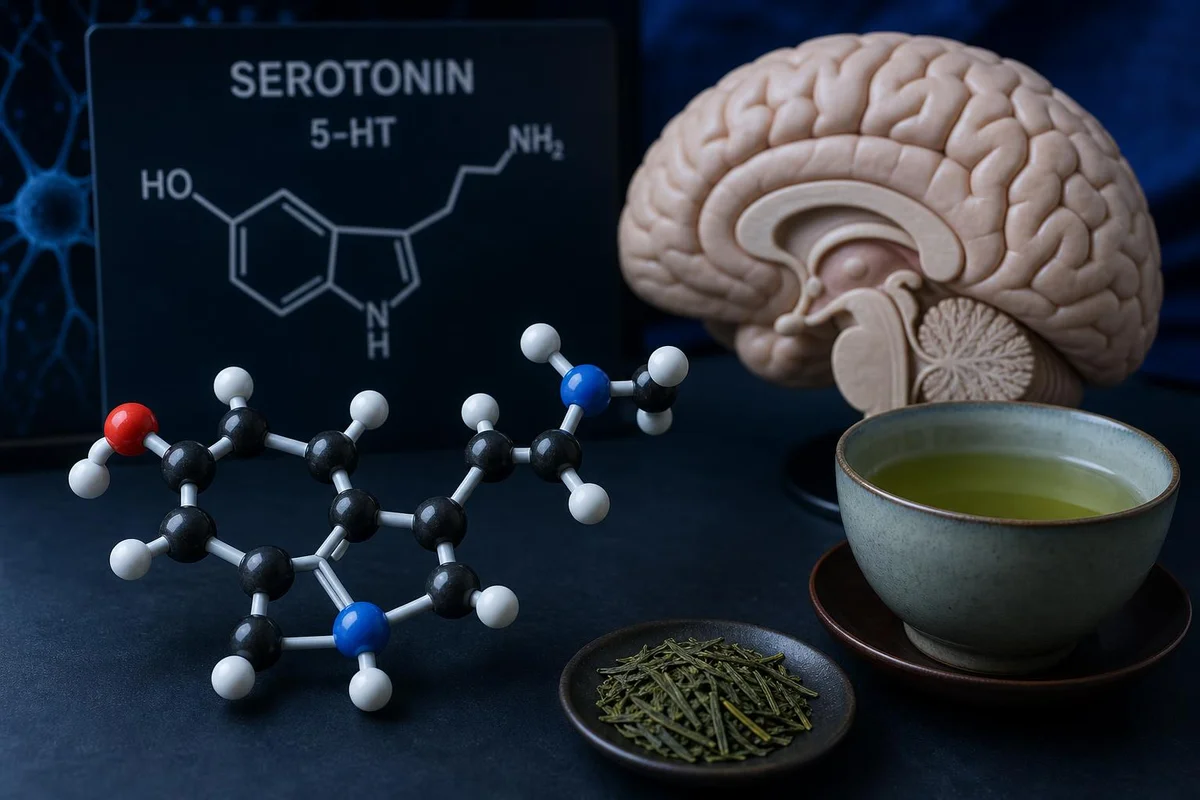
Serotonin Pathway: Mood, Sleep, Gut-Brain Signaling, and the Safety Problem with “Mood Boosters”
Serotonin is often described as a happiness chemical, but that shortcut can mislead readers. Serotonergic signaling is involved in mood, emotional processing, sleep-wake rhythms, appetite, gut function, perception, and medication interactions. This page explains the pathway without turning serotonin support into a casual supplement stack.
Serotonin is not simply happiness
Serotonin participates in mood, emotional processing, sleep-wake timing, appetite, gut signaling, pain processing, cognition, and perception. Calling it a “happiness chemical” makes supplement decisions feel simpler than they really are.
Gut serotonin and brain serotonin are not interchangeable
Much of the body’s serotonin is outside the brain, especially in the gut. That matters for physiology, but it does not mean every gut-focused supplement directly raises brain serotonin or improves mood in a predictable way.
Serotonergic safety is medication-sensitive
SSRIs, SNRIs, MAOIs, triptans, lithium, MDMA-like substances, St. John’s wort, 5-HTP, and other serotonergic agents can create interaction concerns. “Natural mood support” can still be pathway-active enough to matter.
The premium decision framework
The useful question is not “how do I increase serotonin?” A better framework asks what problem is being targeted, whether the ingredient has human evidence for that outcome, and whether the safety context allows serotonin-active experimentation at all. Mood support, sleep timing, gut-brain physiology, and psychoactive effects are different decisions.
1Is the goal mood support, anxiety support, sleep timing, emotional processing, appetite, gut-brain context, or psychoactive mechanism learning?
2Is the ingredient a serotonin precursor, reuptake-influencing herb, adaptogen, nutrient, or only loosely marketed as mood support?
3Could the person be using antidepressants, migraine medications, stimulants, lithium, MAOIs, psychedelics, MDMA-like substances, or other serotonergic supplements?
4Would a lower-risk intervention like sleep consistency, morning light, exercise, therapy, nutrition, or clinician review fit the problem better than a serotonin-active stack?
Safety checks
What to check before using serotonin-support supplements
Serotonin-related supplements should be filtered through interaction risk before product interest. These checks keep the page useful without encouraging unsafe self-treatment.
Medication overlap
Do not treat serotonergic supplements casually with SSRIs, SNRIs, MAOIs, triptans, lithium, linezolid, tramadol, MDMA-like substances, or multiple mood-support products.
Mood destabilization
Bipolar disorder, psychosis history, panic sensitivity, severe insomnia, and rapid mood shifts deserve clinician review before experimenting with serotonin-active supplements.
Symptom seriousness
Persistent depression, suicidal thinking, severe anxiety, eating changes, or major sleep disruption should not be handled by supplement stacking. Use education to prepare better clinical questions.
Related profiles
Serotonin-adjacent herbs and compounds to compare carefully
These profiles do not all mean the same thing. A serotonergic ethnobotanical, a mood-support botanical, an adaptogen, and a serotonin precursor each carry a different evidence and safety story.
If the goal is anxiety or mood support, use the anxiety guide cluster and safety checker before combining supplements. If the goal is mechanism learning, compare serotonin with GABA. If the goal is practical sleep or stress support, start with the sleep and calming resources before assuming serotonin is the limiting pathway.